Brick by Brick: Reflections on Transformational Governance at CDS
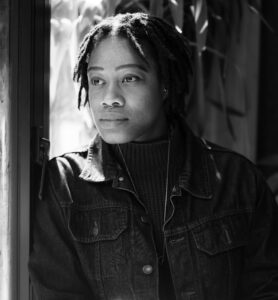
So’l Jelenke headshot.
Read time: 15 mins approx.
Hi, I’m So’l. Body mover and shaker, filmmaker, writer, facilitator, art lover and explorer. A dreamer.
A Chisenhale Dance Space (CDS) community member, ‘activator’, artist committee member and conduit. The last three are titles I’ve held simultaneously for just over the past twelve months, with my role as artist committee member spanning a total of twenty eight months.
I list these identifiers not as decoration, but as evidence. Because upon embarking on my journey into CDS’ artist committee, a voice of self doubt told me that in order to truly belong and bring meaning, I needed to be a professional dancer/ choreographer, and that was the only and obvious currency of legitimacy within such an organisation.
However, over the last two years, I’ve had the pleasure of that assumption being dismantled. It is the multifaceted, lived experienced, curious parts of me, not industry mastery, that allowed me to fully take on a position of leadership in an organisation that sets out to create meaningful change in its operations, and has subsequently done so in my life.
I’ll be sharing reflections and learnings of my experience as CDS artist committee member, identifying takeaways for sustained radical ways of working within the organisation, under the concept and practice of Transformational Governance.
Finding My Seat at the Table A few years ago while processing deep grief and loss, I realised that I needed to fill a growing void within me with art and community. A friend and mentor who had worked at CDS in its early days back in the 80’s signposted me to its callout for new community members.
“HEY YOU, ARTIST!” I remember reading in block capitals, punchy and direct.
Who, me?
“ARE YOU LOOKING TO BUILD YOUR COMMUNITY?” the copy continued.
Well, yes.
“WHAT DO YOU WANT TO MAKE HAPPEN?”
Let’s see, where do I start?
“COME TAKE A SEAT AT THE TABLE…”
It was a sign, surely.
Something about the invitation felt open and warm, intentionally calling for more than just dancers. Given my ability to never quite fit in to circles, it’s no surprise that I’d find a comfortable space for myself with other kind and brilliant creative minds pushed to the margins by society due to our one or more shared qualities, that being identifying as Black or Brown, of the Global Majority, and/or D/disabled/ Neurodivergent.
And so, in 2023, as I result of a reimagining of what CDS could be in response to internal challenges and a need for social change, I successfully applied to join the CDS community, found a seat at its artist committee table, and began to “make sh*t happen” (as we like to say internally). This is credit to a handful of existing community artists who led this early reimagining in the form of a pre committee group back in 2020, an infamous time of global unrest at the inequalities and racism in the world. Many Western corporations responded with the short-lived, knee jerk responses of doing what they do best by jumping on trends that clean up their optics and put them in a conversation.
Then there’s CDS that arguably doesn’t do enough to shout about its commitments to antiracism and antiableism; and how can it without a marketing army and million pound budget? With the now 250+ strong community members CDS has, there’s something to be explored in making ambassadors of the community in shouting about their benefits of engagement. This type of authenticity, however, is rooted in an honesty that keeps CDS staff accountable to the community it serves in remaining genuine to its antiracist and antiableist commitments, otherwise there’s nothing to shout about.
Rewriting the Foundations
When I joined the Artist Committee in 2024, it was in the middle of a turbulent time. Every year, half of the committee makes way for new members to join by way of fairly distributing power, responsibility and keeping things fresh. A practice in line with the Transformational Governance approach CDS takes, which the artist committee sits at the heart of in keeping things truly artist-led. The existing committee members felt it accurately represented the stance of the community to make an openly political statement in support of Palestinians facing genocide.
This decision was met with shocking and disappointing backlash from a campaign group, which consequently led to a letter from The Charity Commission. This response forced CDS into crisis management, questioning where we stand as a charity, given what we stand for as a community. Art has and will always be political. It is the space for expression and social commentary, reflecting the times. With the support of the trustees, CDS decided to begin the process of revisiting its charitable objects set from its founding days, which no longer fully reflected the current realities of the organisation or its community. Reworking the charitable objects sustainably embeds an antiracist and antiableist focus into the foundations of the organisation, transcending the transitory nature of the people that also make an organisation.
Integrity in Practice
One of the ongoing challenges for a micro-organisation like CDS is survival within a struggling arts economy in which dance remains the smallest sector of a billion-pound industry. During my tenure, multiple dance organisations and arts spaces have closed, some of them friends and contemporaries of CDS. Their loss was felt and sharpened the stakes in conversations about sustainability and capacity.
This is why the artist committee matters. Our role is to support staff while also bringing perspective from the outside-in, especially during moments when the pressure of operational survival inevitably narrows vision. We are not smile-and-nod yes-men. We are not there for optics, to stroke egos, or to echo what staff already know. Integrity is a value I hold dear, and for me that has meant pushing for it to be lived in the room, through challenging, questioning and investigation of what is brought forward to get to the heart of the why. This will, of course, at times have been met with pushback where opinions differ and authority trumps, but the main thing is being given the space and safety to show up fully.
A beautiful example I will always return to is when staff proposed a new democratic process for how future artist committee members could join. We worked the idea thoroughly, interrogating it from multiple angles until it was nearly ready to be implemented. But something didn’t feel right and that feeling was shared across the whole committee. It was too soon. The proposal itself wasn’t inherently wrong, but it required time and care to be introduced. Instead, there was an unexpected urgency surrounding it, and as a team we had to gently, but firmly, apply the brakes.
What followed was deeply encouraging, demonstrating respect, humility and a built up trust between CDS staff and artist committee. After a quieter moment, between a coffee break and a chance to reset, staff acknowledged becoming carried away by the momentum of the idea. They apologised for the pressure it placed on the committee and thanked us for helping steer the process back to a more grounded position.
What that moment revealed was the changed state of the community itself. CDS had grown significantly in a relatively short amount of time bringing new layers of consideration. The proposal was too far ahead of the seemingly smaller and more immediate challenges in front. Challenges that, if handled with care, could eventually lead to that imagined future in a way that was more considered and less disruptive. Before introducing structural change, we needed stronger foundations- more intentional connection-building between members, or at least a clearer sense of where those connections actually stood.
In the end, the situation became productive. It demonstrated that Transformational Governance is not in how quickly change can be introduced, but by how responsibly that process is held. If staff had pushed their agenda and the artist committee had conceded out of fear, fatigue or lack of care, the repercussions of that kind of rushed decision-making could have actively harmed the community it is meant to serve.
Reclaiming Autonomy
The truth is, the artist committee wasn’t always like this: a space where its members felt properly connected to the influence we are supposed to have, despite having no legal power within the organisational structure. We’ve had a member decide to step out of the role, catalysing deep reflection and illuminating blind spots. My predecessor, the formidable Valerie Ebuwa asks, “Can CDS ever be truly anti-racist and anti-ableist in its current charitable structure? Can any organisation?”
For me, it took the better part of two years to arrive at a place that felt less confusing, overwhelming, hierarchical. A major development in aiding this shift was the committee reclaiming a sense of autonomy. As a group, we identified the need to ideate and confer independently of the influence and presence of staff. The energy in those moments was noticeably different. Without staff in the room, this naturally opens up space for more honest reflection and unfiltered thinking to surface. This isn’t about exclusion, but about creating the necessary conditions for authentic, uninfluenced ideas that are genuinely reflective of artists’ experiences, rather than shaped by organisational pressures or expectations.
Given that the Artist Committee has only one day a month to meet, with no regular funding allocated for additional paid time, it became essential to formally embed independent committee time into the agenda. Responding to the multiple pressures faced by a small organisation like CDS requires agility, meaning that priorities can often shift quickly. With the depth and breadth of topics brought to meetings across each month, underfunding places the committee under a particular strain, compressing the bulk of meaningful work into a single day.
The consequences of this should not be overlooked. When time is scarce, depth is compromised. Conversations are shortened, decisions risk being rushed, and opportunities for reflection are limited. While independent committee time has not always been afforded the depth it requires within an already tightly scheduled day, I strongly recommend that this space be protected in future to maximise its value and sustain the autonomy it supports.
Knowing the imperfections with which CDS operates under, my privilege of working closely with staff and trustees has given me insight into their commitments to its antiracist, antiableist policies and providing opportunities for marginalised artists. I urge the new cohort of artist committee members to uphold a virtuous working environment that will allow them to feel safe enough and empowered to keep staff accountable to the practicalities these policies and principles require.
Foundations, Not Finish Lines
It took me time to settle into my role and to understand the workings of an organisation I was completely new to. Much of the work turned out to be foundational- laying groundwork that did not fully materialise into visible outcomes during my term. This has made the two year tenure of artist committee members, with adaptation to new group dynamics halfway through, feel relatively short. I found myself wondering if the seemingly quick turnover of committee members, introduced in the name of fairness and access, risked doing more damage than good if it is constantly shifting and changing?
But this is part of the design. Governance in this context is less about individual completion and more about collective continuation. Each person lays their brick and then hands the work over to the next group. The structure grows not through individual ownership, but through sustained, shared effort across time. It’s a reminder to not become overly attached to outcomes, but simply contribute responsibly and then make space for others to continue the build.
I’m genuinely glad that the value of the artist committee is felt openly and acknowledged by staff. In return, I have been able to witness positive changes in the way things are run, even if those changes are first only visible within the committee room. Change often takes time. A long time. It takes real work to undo structures that no longer serve but have been around awhile. It requires constant dedication to seeing things through for the good of the collective, in spite of the challenges. And so, if it takes reworking the way the committee itself functions in order to build a structure strong enough to radiate outward into the wider community, then I believe the time and effort is worth it.
The Work Continues
As I reach the end of my tenure as a CDS artist committee member and conduit, I want to close by naming some of the positives that have shaped my time and practice.
I’ve engaged in opportunities that have strengthened my skills, expanded my creativity, and grown my network in unanticipated ways that have felt nourishing. Contributing to the development of CDS’ antiracism policies, interrogating their authenticity and accountability remains one of the most significant tasks I’ve had to work on. Likewise, serving as a conduit between the board of trustees and artist committee has broadened my understanding of organisational structures and deepened my relationships across the organisation. Advocating for fellow committee members and the wider CDS community, ensuring that needs translate into action has been work I gave full regard.
It has been a genuine pleasure getting to know the CDS community, a group of people who care deeply and are passionate, artistically bold, highly skilled, generous, and of course, united by a shared love of dance. Many are people who I have learned from, received support from, and had the privilege of making and presenting work alongside.
I also want to acknowledge my forerunners: the 2020 steering group. Their openness, advocacy, and insistence on change laid the first bricks that made the artist committee possible. Equally, the willingness of CDS staff to respond, and make space for those early dreams upheld CDS as an artist-led organisation.
To the artist committee, thank you for hearing me out, sharing your perspective, and for the laughter that made heavy days lighter. To the current CDS staff, thank you for supporting my journey and championing my development every step of the way.
The impact of this experience has fundamentally changed me. It has refined my leadership, strengthened my voice, and clarified my practice. When I look back on these two years, I see growth that I will carry forward into future spaces, and into the work that continues long after individual tenures come to an end. Transformational Governance, as I have experienced it, is not about speed, visibility or declaration, but about responsibility, reflection, and the courage to hold challenging processes for change with care.
My hope is that the doors of CDS remain open, sustained by the funding and external support necessary for its survival.
That its commitment to antiracism and antiableism continues to be recognised, valued, and properly resourced so it can fully serve its community. That the staff body reflects, as closely as possible, the diversity and realities of the community it exists for. And that the community itself feels the impact of being part of a collective of artists with enough shared will power to challenge harmful systems and contribute to meaningful social change through art.
Because the future of artist-led spaces depends on those willing to question, protect and sustain them.
The work continues. Brick by brick.
by So’l Jelenke, April 2026.